
I want to start with something I'm a little embarrassed about.
A few years ago, when I was still working in fashion media and starting to think more carefully about consumption, I went through a phase of believing I'd found the solution: I would just buy from "sustainable brands." I made a mental list. I bought a few things. I felt like I'd resolved the tension between loving clothes and caring about where they came from.
I hadn't, of course. What I'd mostly done was transfer my shopping habits to a different set of brands, several of which turned out to have sustainability claims that were, on closer inspection, fairly thin. I'd swapped one kind of uncritical shopping for another kind of uncritical shopping — just with better marketing copy and a higher price point.
What I didn't have then, and have spent time building since, is a practical way of reading brand claims. Not a definitive verdict on which brands are "good" or "bad" — that's more complicated than any single framework can handle — but a set of questions that help me slow down and look more carefully before I decide whether a brand's eco-story is actually meaningful.
This is that framework.
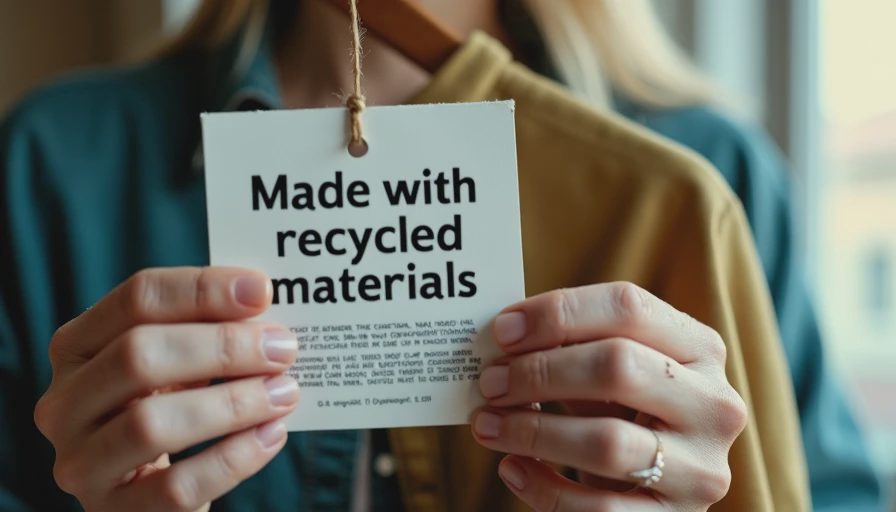
The Specific Language Patterns Worth Slowing Down For
Greenwashing doesn't usually look like outright lying. It looks like carefully chosen language that sounds meaningful but commits to very little. Learning to spot it is mostly a matter of learning which phrases are designed to feel reassuring without actually saying anything specific.
"Conscious" / "Conscious Collection"
This is probably the most widely used and least regulated term in sustainable fashion marketing. "Conscious" has no legal definition, no minimum standard, and no third-party verification requirement attached to it.
A brand can call anything a "Conscious Collection" regardless of what it's made of, where it was made, or how workers were treated in the process. When I see this word in fashion marketing now, I read it as a signal to look harder, not a reassurance to trust.
"Eco-friendly"
Similar problem. "Eco-friendly" is unregulated, and it exists on a spectrum so wide it's almost meaningless as a standalone claim. A polyester garment made with 20% recycled plastic bottles can be marketed as eco-friendly.
Compared to a garment made with 0% recycled content, that's technically true — but it's still a synthetic fabric that sheds microplastics every time it's washed, still requires petroleum to produce, and still isn't biodegradable. "Eco-friendly" used without specifics tells you almost nothing useful.
"Better for the planet" / "Better cotton" / "Responsible sourcing"
The comparative framing here is worth noticing. Better than what, exactly? "Better cotton" is actually a specific certification program (Better Cotton Initiative), but when brands use it in marketing, they often don't mention that BCI doesn't require organic farming or guarantee fair wages — it sets minimum improvement standards that are meaningful in context but shouldn't be mistaken for a rigorous ethical stamp. "Responsible sourcing" is even vaguer and almost entirely undefined.
"Our journey toward sustainability"
This one is interesting because it sounds humble and honest, which is part of why it works. Framing sustainability as a "journey" or a "commitment" or a "goal" is a way of getting credit for intention without being held to outcomes. I don't think every brand using this language is acting in bad faith — genuine improvement takes time and the framing isn't always cynical — but I've learned to treat it as a starting point for questions, not an answer.
Carbon neutral claims
These require the most scrutiny right now, because "carbon neutral" has become genuinely complex. Most fashion brands achieving "carbon neutrality" are doing so through offset programs, not through actual emissions reduction.
Offsets vary enormously in quality and permanence — some are robust, many are not — and the science on whether offset-based carbon neutrality represents a meaningful environmental benefit is contested.
This doesn't mean carbon neutral claims are automatically dishonest, but it does mean "we're carbon neutral" deserves a follow-up question: how are you achieving that, and what percentage is actual reduction versus offset?
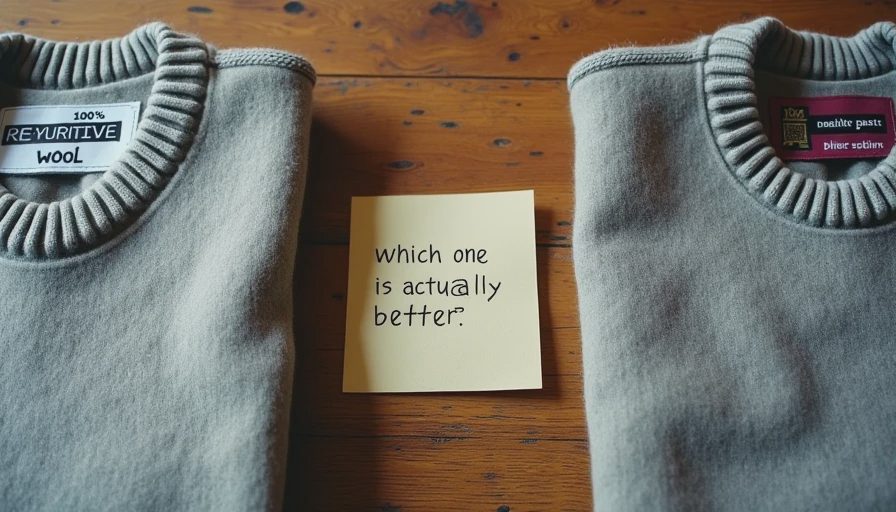
What to Look For Instead
The absence of greenwashing language isn't the same as the presence of meaningful information. Here's what I actually find useful when I'm trying to evaluate a brand more seriously.
Specific material percentages and sourcing claims. "Made with 100% organic cotton certified by GOTS" is meaningful. "Made with natural fibers" is not. The specificity is the signal. Brands that are genuinely doing the work tend to be specific, because vagueness is where things fall apart under scrutiny.
Named factories and production transparency. A small but growing number of brands publish their factory list — the actual names and locations of the facilities where their clothes are made. This doesn't guarantee good conditions, but it does mean the brand can be held accountable if problems surface. Factory transparency is still rare enough that when a brand does it, it's worth noting.
Third-party certifications with actual standards. Not all certifications are equal, but some do represent meaningful third-party verification:
Certification | What It Actually Covers |
|---|---|
GOTS (Global Organic Textile Standard) | Organic fiber sourcing + social criteria across the supply chain |
Fair Trade Certified | Minimum wages, safe conditions, community development funds |
bluesign® | Chemical safety and resource efficiency in fabric production |
B Corp | Broad social and environmental performance, transparency, accountability |
Oeko-Tex Standard 100 | Tests for harmful substances in finished fabric — not a sustainability cert, but useful |
A note on B Corp specifically: it covers a company's overall operations, not product-level sustainability. A B Corp brand can still make environmentally harmful products. It tells you something about how a company operates, not necessarily what it makes.
Honest acknowledgment of limitations. Brands that say "we're working on this, here's what we haven't solved yet" are more credible to me than brands whose sustainability page reads like a press release. Perfection is not achievable in fashion supply chains right now. The brands I trust most are the ones that seem to know that.
A Practical Starting Point
If all of this feels overwhelming, a simpler version: when a brand uses a sustainability claim in its marketing, ask one question — what specifically does that mean, and who verified it?
If you can find a specific answer to both parts, the claim is probably worth something. If the answer to either part is vague, that's useful information too.
You don't need to research every brand you've ever bought from. But slowing down for thirty seconds to read past the marketing language on a new brand you're considering — especially one charging a sustainability premium — is a reasonable habit that compounds quickly. The more you do it, the faster you get at spotting the difference between a brand that's done real work and one that's hired a good copywriter.
The two are not the same thing, even when they sound almost identical.
Travellers Write
No letters yet — be the first traveller to write.