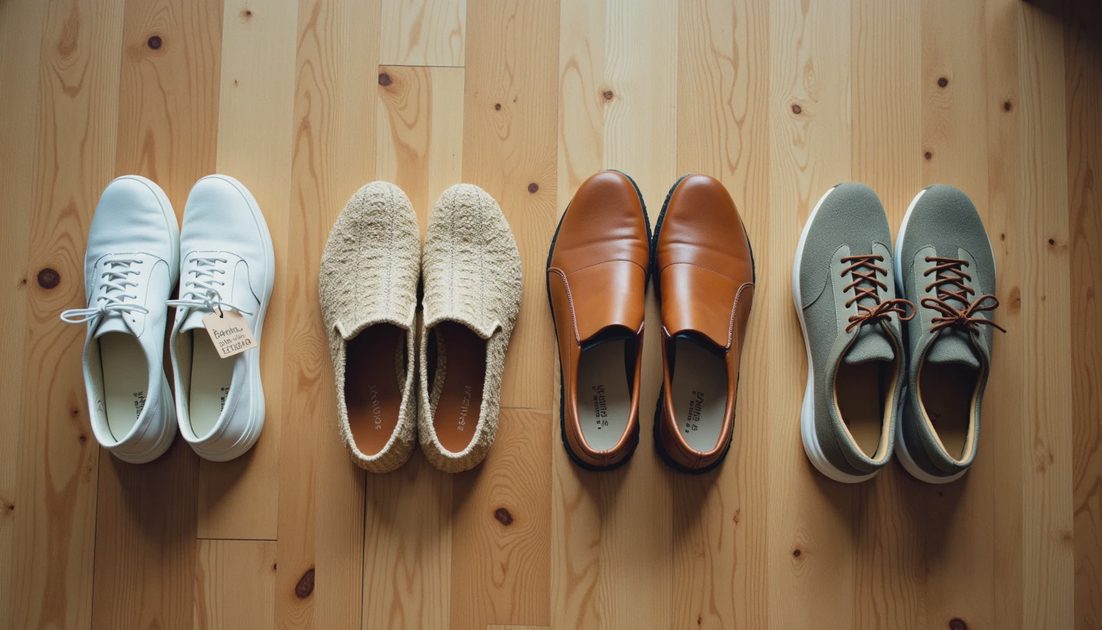
Shoes are where sustainable fashion gets genuinely difficult, and I want to acknowledge that upfront.
Most clothing, at its most basic, is fabric cut and sewn. The sustainability questions are real — fiber sourcing, dye chemistry, labor conditions, end-of-life — but the material complexity is relatively contained. Shoes are a different engineering problem.
A single pair can involve leather or synthetic uppers, rubber or foam or cork soles, metal hardware, synthetic adhesives, woven linings, and multiple layers of padding — often from different suppliers, in different countries, assembled in a factory that may or may not be transparent about its processes.
This is why the sustainable footwear space has both genuine innovation and a lot of wishful marketing. It's easy for a brand to make one high-profile sustainable claim — "our soles are made from recycled ocean plastic," for instance — while the rest of the shoe's construction remains entirely conventional. I've spent enough time reading brand sustainability pages to develop a fairly calibrated skepticism, and I try to apply it here.
The five brands below are ones I've researched seriously, and in most cases worn personally. None of them are perfect. I'll say what I actually think about each one.
Brands Worth Knowing
1. Nisolo
Nashville-based Nisolo makes leather footwear — boots, loafers, sandals, sneakers — with a strong focus on fair wages and supply chain transparency. Their Lowest Wage Disclosure commitment is one of the more honest things I've seen a fashion brand do: they publish the lowest wage paid to any worker in their supply chain, alongside the living wage benchmark for that region, so you can see the gap rather than just reading a reassuring statement about "fair wages."
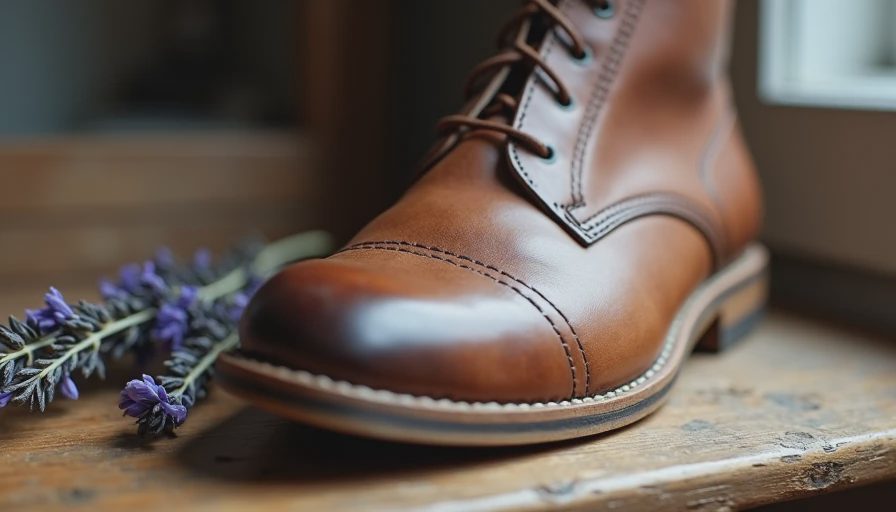
The leather is sourced from certified tanneries, and they've published third-party audits of their Peruvian factories. They're also B Corp certified, which as I mentioned in the greenwashing piece is a company-level signal rather than a product-level one — but alongside their other disclosures, it adds up to a reasonably credible picture.
The shoes themselves are well-made and designed to last. The aesthetic is classic and versatile — not trend-forward, which for shoes is honestly a point in their favor. A pair of Nisolo Chelsea boots I've owned for two years has aged better than more expensive shoes I've owned from conventional brands.
2. Veja
Veja is probably the most recognizable name on this list, and there's a reason for that — they've been doing genuinely interesting work on supply chain transparency since 2005, well before it was a marketing trend. Their sneakers use wild Amazonian rubber for soles (supporting rubber tapper communities in the Amazon), organic cotton from small Brazilian cooperatives, and various alternative leather materials including apple leather and B-mesh (made from recycled plastic bottles).
The reason I still include Veja despite the recognition is that familiarity hasn't diluted their actual commitments. Their factory in Brazil is well-documented and audited. Their website is unusually detailed about both what they've achieved and what remains unsolved.
The practical caveat: Veja sneakers are not cheap for what they are structurally — you're partly paying for the supply chain premium, not purely the product. Whether that's worth it depends on how much you value the sourcing story, and how much you'll actually wear them. For everyday sneakers you reach for constantly, the math works. As an occasional-wear item, it's harder to justify.
3. Quince (footwear line)
Quince is an interesting case because it doesn't market itself primarily as a sustainable brand — it markets itself as a value brand, cutting out the middleman to offer quality materials at lower prices. But several of their shoe styles use genuinely good materials: Italian leather, natural rubber soles, suede from responsible tanneries.
I include them here with a caveat: Quince's sustainability transparency is limited compared to Nisolo or Veja. They don't publish factory information or wage data. What they offer instead is material quality at a price point that makes it realistic for more people to buy things that will actually last — which is its own form of waste reduction. A $120 leather loafer from Quince that you wear for five years produces less environmental impact than a $40 synthetic loafer you replace every eighteen months.
If you're in a budget range where Nisolo or Veja isn't realistic, Quince's leather footwear is worth looking at seriously.
4. Birkenstock
Hear me out. Birkenstock is not a brand that markets itself with sustainable fashion language, which is part of why I find it credible. The materials they've used for decades — cork, jute, natural rubber, vegetable-tanned leather — are genuinely low-impact by footwear standards, not because they're chasing a certification but because those materials have always been part of how the product works. Cork footbeds are naturally antimicrobial, mold to the foot over time, and are harvested without killing the tree. The vegetable-tanned leather upper on a classic Arizona sandal is biodegradable in ways that most synthetic alternatives are not.
The other thing about Birkenstocks: they are genuinely, verifiably repairable. New footbeds, new soles, resoled straps — the repair program exists and functions. I've had a pair of Arizonas resoled once and they're still going. That repairability is a sustainability argument more honest than most brands' sustainability pages.
The style objection is fair — they're not for everyone, and I don't think you should buy shoes you won't wear because they score well on an abstract sustainability metric. But if they work for your life, they work very well.

5. Atoms
Atoms makes minimalist sneakers in the US and Pakistan, with a focus on precision fit (quarter sizing), durable construction, and a repair/replacement program. They're quieter about sustainability than some brands on this list — you won't find a splashy environmental impact page — but the construction quality is real, the materials are well-chosen (washable knit uppers, natural rubber soles), and the size precision means fewer returns and fewer ill-fitting shoes that end up unworn.
The case for Atoms is more about longevity than materials sourcing. A sneaker that fits exactly right and is built to last is more sustainable in practice than a beautifully certified sneaker that wears out in a year. Both matter; I think longevity is underrated.
A Note on What's Missing
There are brands I haven't included here that get significant sustainable fashion coverage — Allbirds, Rothy's, some of the plant-leather startups. I'll cover those separately, because they raise more complicated questions than this list accommodates cleanly. Allbirds in particular has been through enough public scrutiny around their actual emissions numbers that it deserves more than a sentence.
The short version: the brands above I feel reasonably confident recommending as starting points. They range in price, aesthetic, and approach, and I've tried to be honest about what each one does well and where the limits of my confidence are.
Sustainable footwear is genuinely hard. The best version of shopping it is probably: buy secondhand when you can find the right fit, buy new from brands with real transparency when you can't, and take care of what you own well enough that you're not replacing it before you have to.


Travellers Write
No letters yet — be the first traveller to write.