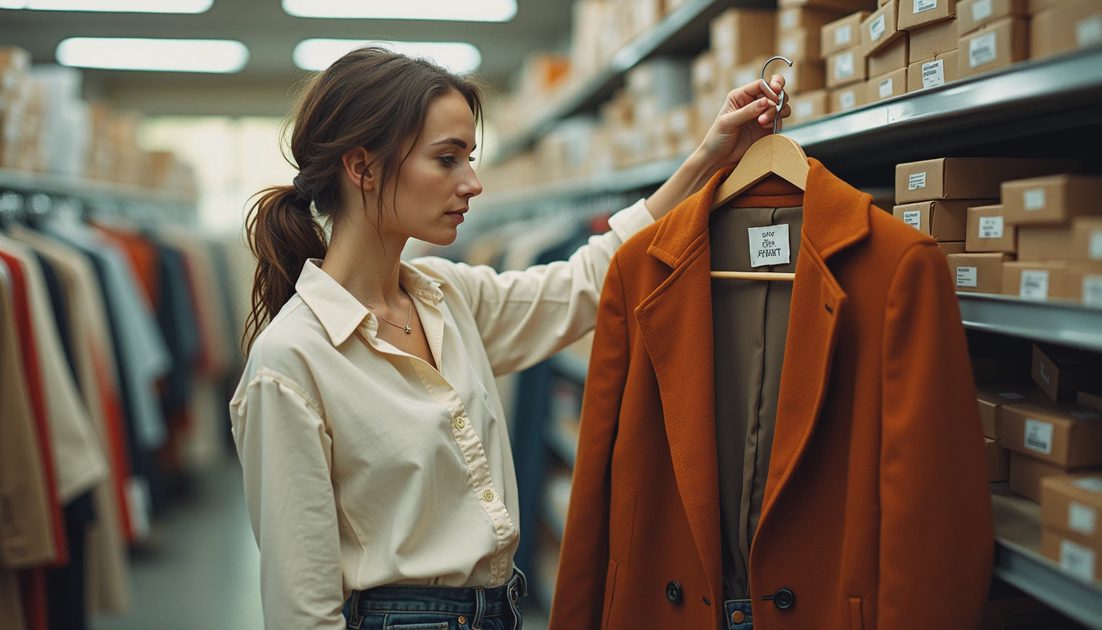
There's a version of thrifting that feels productive but isn't.
You walk into a store without a specific agenda. You spend an hour working through the racks. You come out with six things — a blouse, a pair of jeans, a random sweater, a scarf, maybe a jacket — for a total of $34. You feel good about it because you spent almost nothing and got a lot.
Three months later, four of those six things are unworn. The blouse has a fit issue you'd noticed but discounted because the price was so low. The jeans are slightly the wrong rise. The sweater is a synthetic blend that pills. The scarf seemed useful in the store and has been used approximately once. You've spent $34 on things that take up space and don't work, which is essentially the same outcome as spending $200 on things that take up space and don't work — just cheaper per mistake.
This is the pattern I was in for the first couple of years I shopped secondhand seriously. I thought "thrifting is good" and "buying cheap is good" and combined them into a habit of buying frequently and cheaply, which produced a wardrobe that was large, affordable, and not particularly useful.
The shift happened when I started applying the same criteria to thrift store purchases that I was starting to apply everywhere else. That shift reduced how much I bought by about seventy percent and improved how much I used by roughly the same amount. Here's what it actually involves.
The Three Questions Before Anything Goes in the Cart
I developed a simple set of questions over a couple of years of trial and error. Not a complex framework — just three things I ask before I take anything off a rack seriously.
Question one: Would I buy this if it were new at a reasonable price?
This is the most important question and the one that eliminates the most impulse purchases. The logic is simple: if a piece isn't right for your wardrobe, life, and aesthetic, being cheap doesn't fix that. A shirt in a color you never wear is not useful at $4 any more than it's useful at $40.
What this question is really asking is: does this piece, on its own merits — fit, fabric, color, silhouette — earn a place in what you're building? Not "is it a bargain?" The bargain is a consequence of thrifting, not a reason to buy.
The practical version: I look at each piece and ask myself whether I'd be happy to have it if I'd paid $60-80 for it new. If the answer is yes, I keep evaluating. If the answer is no, I put it back, regardless of the price tag.
Question two: What's the fabric?
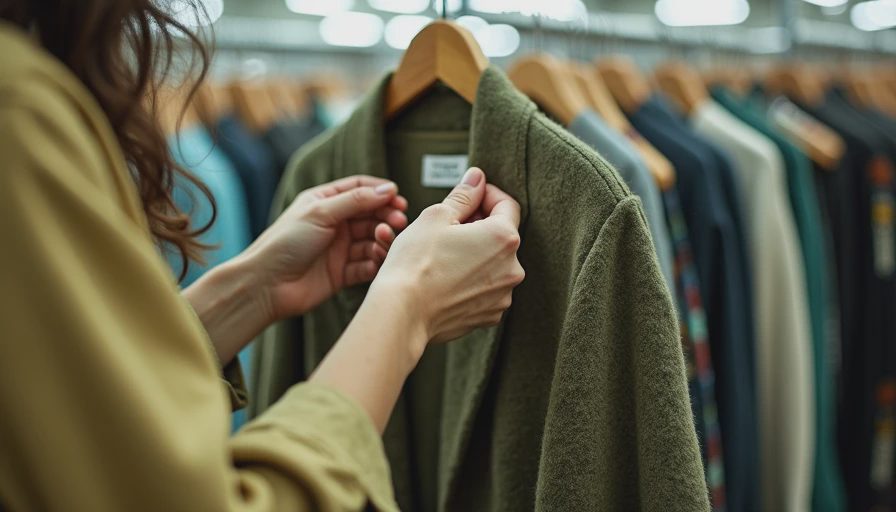
I check the label for fiber content before I do anything else with a piece. This step takes five seconds and eliminates most of the low-quality purchases that used to end up unworn in my wardrobe.
My current minimums: I'll buy cotton, linen, wool, silk, cashmere, and quality cotton-linen blends. I'll sometimes buy cotton-modal blends if the weight is good. I've mostly stopped buying synthetic-fiber pieces secondhand unless there's a specific functional reason (a technical outdoor layer, for instance), because they don't improve with age, they shed microplastics in the wash, and they rarely feel as good to wear as natural fibers.
The fabric check also helps with pricing calibration. A cashmere sweater at $14 is a different purchase than a polyester sweater at $14 — not just in quality but in how long it's going to last and how much use you'll realistically get from it.
Question three: What specifically needs to be true about the fit for this to work?
Thrift store fitting rooms vary wildly in quality and availability. When they're available, I use them. When they're not — and in some stores they're not, or they're inconvenient enough that you're tempted to skip — I've learned to be specific with myself about what fit requirements the piece has.
For some pieces, fit tolerance is high. A linen overshirt that I'm going to wear open and loose has very forgiving fit requirements — as long as the shoulders are roughly right and the length is workable, a lot of variation is fine. A structured blazer has tight fit requirements — the shoulder seam needs to sit precisely, the chest needs to close without pulling, the torso length needs to hit at the right point. A blazer with good fabric and bad fit is a worse purchase than a blazer with average fabric and correct fit.
Being specific about fit requirements in advance — before you're holding the piece and feeling the low-price pull — makes the evaluation more honest.
What a Standards-Based Thrift Trip Actually Looks Like
I want to describe a specific recent thrift trip because I think the abstract version of "be more intentional" is less useful than what it actually looks like in practice.
I went to one of my regular Portland stores — a Goodwill outlet I've been visiting for about three years — with two specific things in mind: a structured blazer in a dark neutral, and a mid-weight wool or cashmere sweater for the coming season. Those were the objectives. I'd also look at anything that seemed genuinely interesting, but the trip had a purpose.
I spent about forty-five minutes there. In that time I went through the blazer section and the sweater section methodically, checking every piece by fabric first, then silhouette, then condition. I picked up maybe thirty pieces from those sections and seriously evaluated about eight.
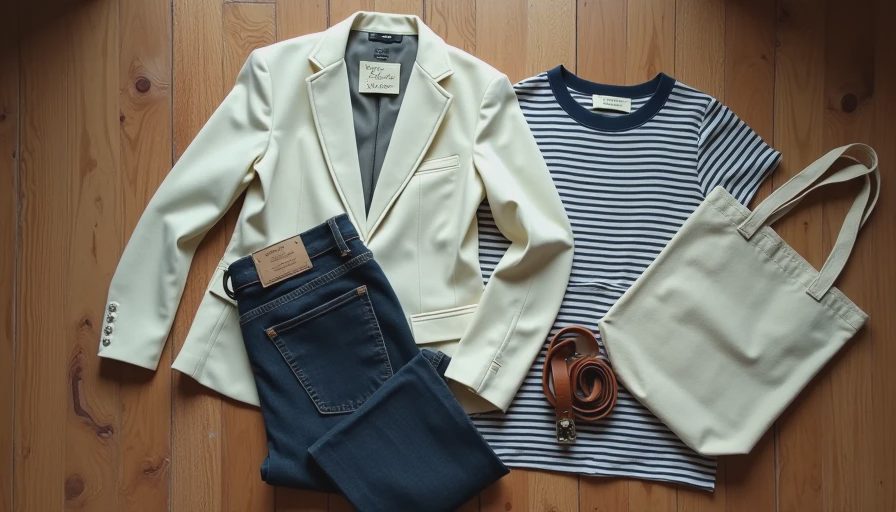
What I came away with: one piece. A cream-toned wool blazer with a structure that was clearly well-made, a fully finished interior lining, and a fit that worked. It was $11. I passed on a cashmere sweater in a good color that had noticeable pilling — not enough to ruin it, but enough to suggest the fiber quality wasn't high. I passed on two blazers with good fabric but wrong shoulder fit. I passed on several things that passed the fabric check but not the "would I buy this new" question.
One piece in forty-five minutes sounds like a slow haul. In my earlier secondhand shopping years, I would have found this unsatisfying. Now it's exactly what I want — one piece that will actually be worn, rather than a bagful of things that won't.
The Thrift Stores Worth Going to Regularly
Not all thrift stores are equally worth your time, and developing a sense of which stores in your area are worth visiting regularly is itself a skill.
The general principle: stores in higher-income neighborhoods tend to have better quality donations. This isn't a universal rule, and there are exceptions in both directions, but the donation quality at a Goodwill in a wealthier neighborhood is on average higher than the donation quality in a lower-income neighborhood — because the people donating have been purchasing at higher price points.
The stores worth returning to are the ones where you've found things you actually kept. I have three stores in Portland that I visit maybe once a month each, because over two or three years of visiting I've learned what their inventory tends to look like and what sections are worth spending time in. Two other stores I visited for a while and eventually stopped, because the quality-to-time ratio never justified the trips.
Building this knowledge takes time, and the only way to build it is to go regularly enough to develop a sense of the inventory patterns. But it's investment that pays off — knowing which rack in which store tends to have natural-fiber knitwear, for instance, is a more reliable path to finding good pieces than spending an equal amount of time browsing broadly.
The Low-Price Pull and How to Resist It
The most honest thing I can say about thrifting with standards is that the hardest part is consistently resisting the low-price pull — the feeling that because something is cheap, buying it is fine even if it doesn't quite meet your criteria.
The low-price pull is strongest on things that are almost right. A blouse in exactly the right color and silhouette but made from polyester. A great wool coat with shoulders that are one size too wide. A beautiful silk scarf in a color combination that doesn't work with anything you own. Almost right at a low price feels like a deal. It usually isn't.
The reframe that helps me most: the cost of an unworn thrift purchase isn't just the money — it's the space it takes in your closet, the mental overhead of seeing it and feeling vaguely about it, and the eventual time cost of dealing with it through donation or resale. A $6 blouse that sits unworn for a year costs more than $6 when you factor everything in.
Thrifting well is genuinely a skill, and like most skills it improves with practice and with having clear criteria. The criteria aren't complicated. The discipline of actually applying them, especially when you're holding something cheap and appealing, is where the real work is.
Travellers Write
No letters yet — be the first traveller to write.