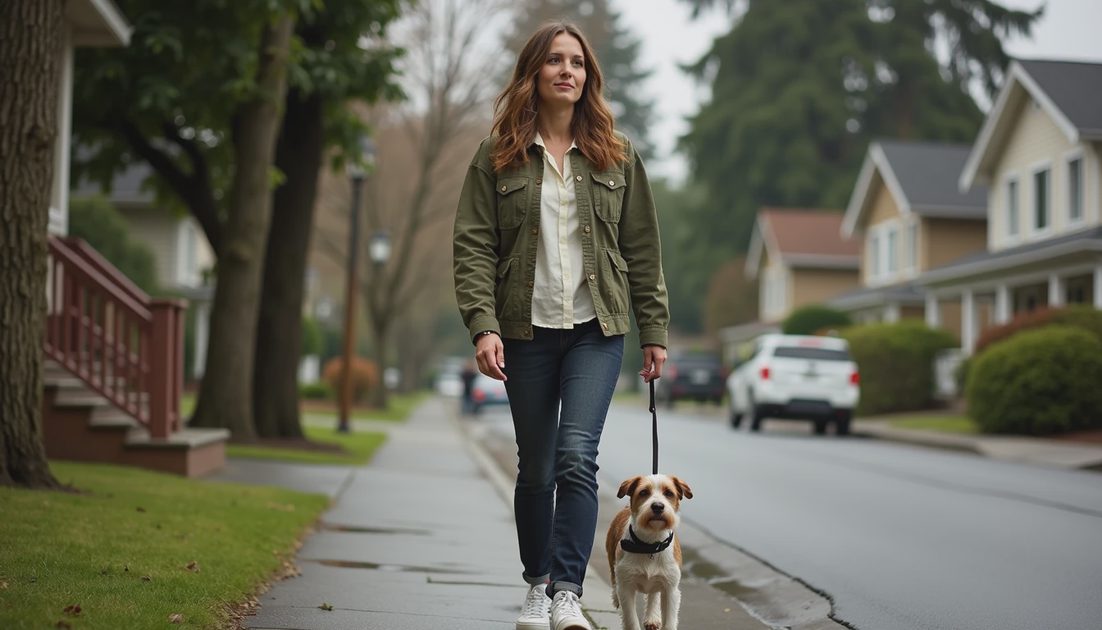
When I moved to Portland from New York, people kept asking me if the weather bothered me.
The honest answer is no — and not because I'm particularly stoic about rain, but because the weather in Portland is not as dramatic as people who've never lived here assume. It doesn't storm. It doesn't pour. What it does, for roughly eight months of the year, is produce a persistent, low-grade dampness — a fine mist that isn't quite rain, an overcast sky that occasionally produces drizzle, a general wetness to the air that means everything is slightly damp most of the time. It's more of a mood than a weather event.
What that weather does to clothing is specific and has shaped my wardrobe more than any other single factor.
But the weather isn't the only thing Portland changed. The city has a specific pace and a specific physical texture — it's walkable in a way New York technically is but doesn't feel, with neighborhoods connected by actual pedestrian infrastructure rather than the aggressive street grid of Manhattan. People walk to the farmers' market and carry it home. They walk their dogs in actual forests. They commute on bikes on rainy mornings. The relationship between a body and its city is more literal here, and your clothes need to accommodate that.
I didn't fully understand what that meant for a wardrobe until about a year after I moved. Here's what I've learned since.
What Portland Weather Actually Requires
The instinctive response to a damp, overcast climate is to acquire waterproof gear. A lot of people who move to the Pacific Northwest do this immediately — they buy a rain jacket, waterproof boots, maybe a Gore-Tex layer — and then discover that the actual Portland daily experience doesn't require full waterproofing most of the time. What it requires is moisture resistance: fabric that doesn't immediately absorb ambient dampness, that doesn't look bedraggled after twenty minutes outside, that handles the drizzle without requiring full rain gear.
Wool is the ideal fabric for this climate, and I didn't fully appreciate that until I'd been here a while. Wool is naturally moisture-resistant — the fiber's structure causes it to repel light moisture rather than absorbing it immediately. It regulates temperature in a way that synthetics don't, which matters in a climate where you might walk from 52-degree outdoor air into a heated coffee shop and back out again multiple times in a morning. It doesn't smell in the way that synthetic base layers do after repeated wear. And in a city that places value on not looking like you're dressed for an outdoor adventure when you're just going about your day, wool manages the weather without looking like weather gear.
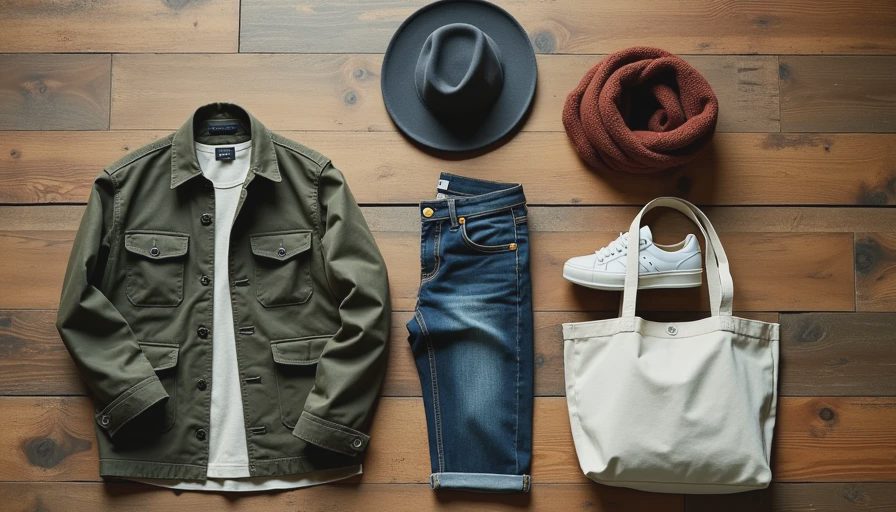
My most-used pieces in Portland weather, in order of use frequency:
A merino wool crewneck or turtleneck as a base layer. This is the piece I reach for more than anything else I own from October through May. A good merino base layer handles the shoulder season — when it's too warm for a real coat but too cold and damp for just a shirt — better than almost any other single piece.
A structured outer layer with some weather resistance. I have a waxed canvas jacket in olive that I bought secondhand from a retiring outdoorsman on Craigslist four years ago. Waxed canvas isn't fully waterproof, but it handles Portland drizzle completely — water beads off the surface, the fabric itself is wind-resistant, and it has enough structure to work as a true outerwear layer rather than just a jacket. It's also a genuinely good-looking piece of clothing, which matters for a city where you spend a lot of time walking between indoor and outdoor contexts.
Good shoes that handle wet pavement. This is where I had to let go of some aspirational footwear choices. I love leather-soled shoes and own several pairs. I wear them in summer. From October through May, leather soles on wet Portland pavement are a liability — they're slippery, and the wet gets into the leather faster than conditioning can manage. My daily shoe for eight months of the year is a white leather sneaker with a rubber sole — water-resistant enough, grip appropriate for wet pavement, comfortable enough for the four or five miles of walking that a normal Portland day might involve.
What Walking Actually Does to Clothes
The walking is the thing I underestimated most when I moved here.
In New York, I walked a lot — Manhattan is a walking city. But Manhattan walking is mostly flat, mostly on even pavement, and mostly broken up by subway trips and cab rides that reset the physical equation. Portland walking is different: it involves real elevation changes, uneven surfaces, roots breaking through sidewalks, occasional gravel paths through parks, wet leaves in autumn that function as ice. And it's longer — without a subway, a trip to the other side of the neighborhood might be a forty-minute round trip on foot rather than a ten-minute subway ride.
What this does to clothing:
Hems take wear differently. Jeans that drag slightly on a smooth New York sidewalk will fray faster on Portland pavement and trail edges. I've learned to hem my jeans slightly higher here than I did in New York — not cropped, just not dragging.
Shoes wear faster and differently. The rubber soles I mentioned above last about eighteen months to two years of daily Portland use before they need resoling. The uppers stay good much longer — the leather or textile upper of a good sneaker outlasts the sole by years, which is an argument for resoling rather than replacing.
Layering capacity matters more than individual piece quality. A perfect single layer that's wrong for the temperature swing of a Portland morning is less useful than an imperfect combination that can be adjusted. I've become better at building outfit logic around layering — something I can remove and carry, something underneath that handles the colder moments, something outer that manages the moisture.
Bag choice is functional, not aesthetic. I carry a canvas tote most days that's large enough to hold a removed layer, a reusable water bottle, and whatever I picked up at the market or the library. This is not a stylish bag in the way my New York bags sometimes were. It is a useful bag. Portland made me understand this distinction.

The Clothes I Stopped Wearing After the Move
Some things simply don't work here in the way they worked in New York, and recognizing that freed up significant mental and physical wardrobe space.
High heels, with limited exceptions. I own two pairs and wear them perhaps four times a year, for occasions where I'm not going to be walking more than a few blocks. Portland is not a heel city — the terrain doesn't support it, the culture doesn't really call for it, and the wet pavement is genuinely dangerous with certain heel types. This was an adjustment, but honestly not a difficult one. I didn't love wearing heels in New York either; I wore them because the context seemed to call for it.
Very formal tailoring. I have one good suit that I keep for the rare occasions that genuinely require it. Portland's workplace culture is casual enough that structured formal tailoring is simply overbuilt for most contexts here. The structured blazer I reach for regularly is the solution — it bridges the gap between fully casual and slightly formal without requiring the full tailoring apparatus.
Delicate fabrics for daily wear. Silk and very fine knits that I wore regularly in New York — for lunches, evening events, the more dressed-up occasions that Manhattan seemed to generate constantly — come out far less frequently in Portland. This isn't a loss exactly; those pieces are still in the wardrobe for the right occasions. But Portland's daily texture is rougher in the literal sense, and delicate fabrics require an environment that justifies them.
What the City Gave Back
I want to end with what Portland's specific requirements gave me rather than just what they took away, because it's genuinely more than a fair trade.
It gave me a wardrobe with a clear logic. Every piece earns its place by answering a specific physical question: Does this handle the drizzle? Does this layer well? Can I walk four miles in this? The clarity of those requirements produces a more coherent wardrobe than any aesthetic aspiration I've had in the past.
It gave me a relationship with clothes that's more physical and less social. In New York, a significant portion of what I wore was about how it read in social contexts — offices, restaurants, the general visual density of Manhattan public life. Portland is less visually legible in that way. People here don't particularly read each other's clothes for status signals the way New York does. What your clothes do matters more than what they say.
It gave me the dog walks in Forest Park, which require an outer layer that handles the mud, a shoe that handles the roots, and a general acceptance that you are going to smell like wet dog at some point during the day. No wardrobe advice adequately prepares you for that, but it does clarify priorities quite efficiently.
Portland didn't simplify my relationship with clothes. It made it more specific. Specific, it turns out, is better.


Travellers Write
No letters yet — be the first traveller to write.