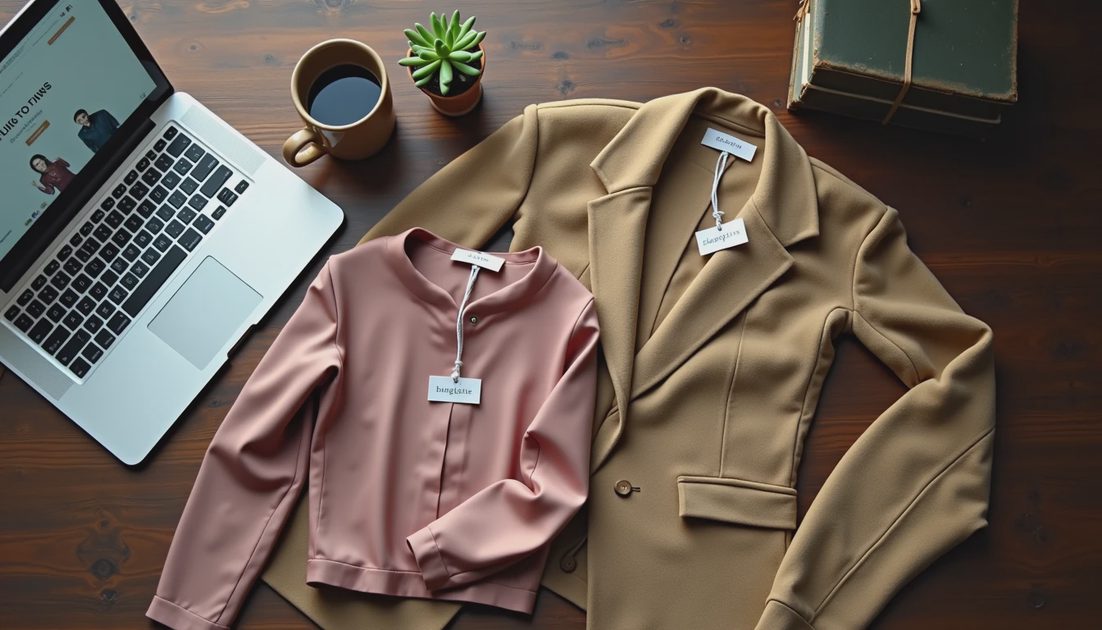
Let me describe a ThredUp experience I've had more times than I'd like to admit.
I open the site with a specific thing in mind — say, a silk blouse, ideally something with a bit of structure, nothing too trendy, under sixty dollars. I type in a search. I get 4,000 results. I add a size filter. Still 2,200 results.
I scroll for a while, clicking things that look promising in the thumbnail and turning out to be not quite right in the photos. Twenty minutes in, I've found nothing useful and I'm somehow looking at a category I didn't start in. I close the tab and go make tea.
ThredUp's scale is simultaneously its best feature and its biggest problem. There genuinely are great things on there — I've found a Vince cashmere crewneck for $22, a Theory blazer in perfect condition for $34, an equipment silk blouse that retails for $280 for $41. But those finds don't surface themselves. They require a specific approach, and if you go in without one, the site's sheer volume works against you.
Build Your Filter Stack Before You Start Scrolling
The single most useful shift I made was deciding that I would never just open ThredUp and browse. The browse experience is designed to keep you on the site longer — it's engineered to be a little addictive and a little overwhelming in equal measure. The way to work around that is to arrive with a filter stack already in mind, and build it before you start looking at results.
My typical starting filter stack looks like this:
Category → Size → Condition (Like New or Excellent) → Price ceiling → Brand
That last one is where most people underutilize the site. ThredUp's brand filter is genuinely good — it covers hundreds of labels from fast fashion to luxury, and using it changes your results dramatically.
Instead of searching "silk blouse" and getting a mix of Zara, H&M, and the occasional Vince, you search "silk blouse" and filter to specific brands you already know make quality silk, and suddenly your results are much more manageable and much more likely to be worth your time.
The brands I filter for most when I'm looking for quality basics and occasional splurges:
Category | Brands Worth Filtering For |
|---|---|
Silk tops & blouses | Equipment, Vince, Eileen Fisher, Theory, Joie |
Blazers & tailoring | Theory, J.Crew (older pieces), Club Monaco, Banana Republic (pre-2018) |
Knitwear | Vince, Everlane (older seasons), Eileen Fisher, J.Crew |
Denim | Madewell, Everlane, AG, Citizens of Humanity |
Outerwear | Patagonia, Arc'teryx, Madewell, L.L. Bean |
A note on that Banana Republic entry: this is something I feel strongly about. Banana Republic's quality dropped noticeably in the mid-2010s when they shifted manufacturing. Older BR pieces — particularly suiting and structured pieces from the early-to-mid 2000s and before — are genuinely well-made. Newer pieces are not.
On a resale platform where you can't always tell the production year from a listing, condition becomes your proxy: if a piece from 2015 still looks pristine, the fabric probably held up. If a piece from 2022 shows significant wear already, that tells you something.
The Search Terms That Actually Surface Better Results
Standard search terms on ThredUp return standard results. The site's search is decent but not sophisticated — it matches keywords in titles and descriptions, which means vague searches return vague results.
A few specific tweaks that reliably improve what comes up:
Search by fabric, not just item type. "Silk blouse" returns better results than "blouse." "Wool trousers" returns better than "dress pants." "Cashmere sweater" is almost always worth filtering down further to "100% cashmere" in the description search if you want to avoid cashmere blends. The fabric specificity filters out a lot of the lower-quality volume.
Use the color filter more aggressively. Neutral-toned pieces — ivory, camel, black, navy, olive — are easier to search for and more likely to photograph accurately. Bold prints and unusual colors are harder to photograph well and more likely to look different in person than in a listing. For online secondhand specifically, I weight toward neutrals because they're a safer bet.
Sort by "Just In" for familiar brands. If you've identified brands you trust and you check the site somewhat regularly, sorting by newest listings for those specific brands is one of the most efficient ways to actually find things before they sell. Good pieces at good prices do move quickly, and the browse-randomly approach means you're almost always seeing the leftover inventory.
What to Actually Check Before You Buy
Getting to a promising listing is only half the work. The other half is evaluating whether it's actually worth it.
Read the condition notes carefully, and look for what's not mentioned. ThredUp grades items as Like New, Excellent, Good, or Fair. These grades are applied by humans and are not perfectly consistent. "Excellent" can mean nearly pristine or can mean "has minor flaws we didn't photograph."
The listing photos usually show the front of the garment; they don't always show the collar, the cuffs, the underarms, or the hem. If the condition notes say nothing about flaws in these areas, that's either a genuinely clean piece or an incomplete description — and there's no guaranteed way to know which.
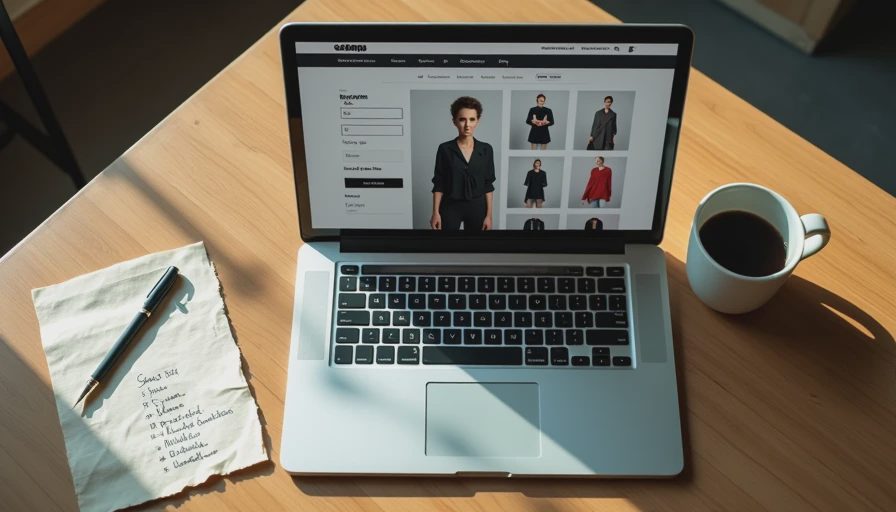
My threshold: for anything over $40, I'll look at the photos for at least two minutes and read every word in the description before buying. If something feels ambiguous, I skip it. The return policy on ThredUp is workable but annoying enough that I'd rather pass on a maybe than deal with the process.
Check the measurements if they're listed. Sizing is inconsistent enough across brands and decades that a size 4 in a brand I know runs large is a completely different garment than a size 4 in something that runs small. When measurements are listed — bust, waist, length — I use them. When they're not, I factor in the uncertainty and only buy if the price is low enough to justify the risk.
Factor in total cost realistically. ThredUp charges for shipping unless you're above a certain order threshold, and returns aren't free. A $12 blouse with $6 shipping that turns out to be the wrong size has effectively cost you something for nothing. I tend to batch my ThredUp orders — if I'm looking for a few things at once, I'd rather hit the free shipping threshold than pay per order.
The Realistic Outcome
I want to be honest about the hit rate. Even with all of this, ThredUp shopping is not a reliable substitute for walking into a store and trying things on. Some items arrive and are exactly what the photos suggested. Others arrive and have a flaw the listing didn't mention, or a fit that doesn't translate the way I hoped, or a fabric that photographs as silk and arrives feeling like satin polyester.
The useful frame isn't "is ThredUp as good as shopping in person?" — it's not. The frame is "is ThredUp worth adding to a rotation of how I acquire clothes?" For me, the answer is yes, with realistic expectations. The wins are genuinely good — I've built a meaningful part of my current wardrobe from pieces found there. But it works best when you treat it like a skill you're developing rather than a shortcut, and when you're willing to put in the filter work before you start scrolling.
The good stuff is in there. It just takes a bit of patience to find it.
Travellers Write
No letters yet — be the first traveller to write.