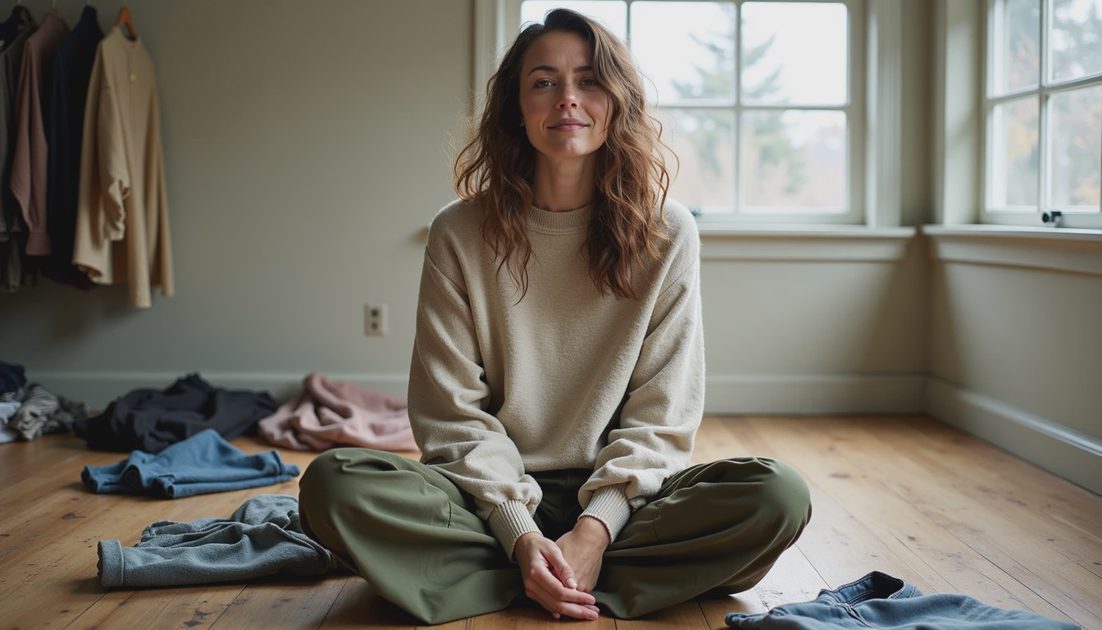
Something happens to words when they get popular enough. They start to mean everything, which ends up meaning nothing.
"Sustainable fashion" has been in that territory for a while now — used to sell $400 linen dresses and $15 "conscious collection" fast fashion items in the same breath, invoked by brands with robust environmental commitments and brands with none, applied equally to someone who's dramatically overhauled their wardrobe and someone who swapped one reusable bag.
I'm not going to argue about what the term should mean. But I do want to be specific about what it actually means in my life, day to day, in the wardrobe I'm currently working with — because I think the gap between the theoretical version and the practical one is where most people get stuck or give up.
This isn't a philosophy post. It's more like a wardrobe audit in essay form.
What It Looks Like in Practice
The version of "sustainable style" that I actually live with has a few concrete characteristics. None of them are particularly dramatic. Most of them took time to become habits rather than decisions I had to consciously make.
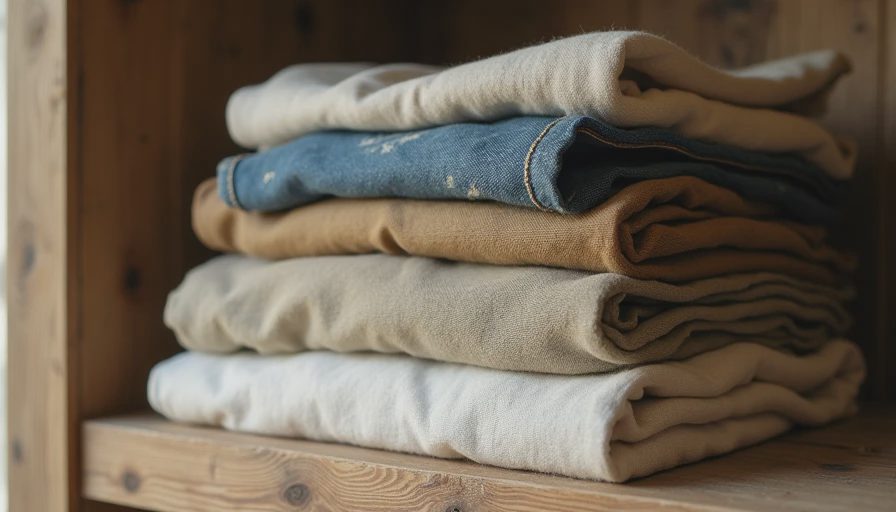
It means I buy secondhand first.
Not exclusively — there are categories where secondhand is harder to find in good condition or good fit, and I'm not going to pretend otherwise. But secondhand is my default starting point now, not a last resort. Before I buy anything new, I check ThredUp, The RealReal, eBay, and a couple of local thrift spots in Portland. Sometimes I find what I need.
Sometimes I don't. When I don't, I either wait or buy new from a brand I've already researched. The shift was less about ethics and more about realizing secondhand shopping, when done with a strategy, actually gets me better quality for less money. The values alignment is real, but honestly the cashmere crewneck I found for $22 was a pretty compelling argument on its own.
It means I track what I actually wear.
This sounds tedious, and the first time I tried it I did it with a spreadsheet and quit after two weeks. The version that stuck was much lower-effort: I keep a small section in my phone's notes app where I log outfits, not in detail, just enough to see patterns.
After about three months, I could see clearly which pieces I was reaching for constantly and which ones had moved maybe twice. That information changed how I thought about buying — not as an abstract principle but as data I had about my own habits. The pieces I wear least aren't usually the ones I like least. They're usually the ones that don't actually fit my life.
It means I've gotten slower at buying.
Not perfectly slow — I still sometimes buy something impulsive that I later regret. But the default speed of acquisition has changed. I've started treating the gap between wanting something and buying it as a feature rather than a problem.
A lot of things I wanted in week one I'd forgotten about by week three, which is information. The things that still seem like good ideas after a few weeks of sitting on it are much more likely to be actual purchases I use.
It means I've learned some basic repair.
I want to be realistic here — I am not a skilled seamstress. I can sew a button back on. I can do a basic running stitch. I've learned one embroidery stitch, which I've used to cover two stains and one small hole, with results that ranged from "charming" to "you have to stand a few feet back."
What's changed isn't skill level, it's the reflex. A small flaw no longer automatically reads as "this item's life is over." That mental shift has probably kept eight or ten pieces in circulation that would otherwise have been donated.
It means I think about fabric.
This is the one that changed my shopping most at the source. I've gotten more specific about what I'm willing to bring in. Natural fibers — cotton, linen, wool, silk, cashmere — perform better over time, care better, and don't shed microplastics the way synthetics do.
This doesn't mean I own zero synthetic pieces; I have a Patagonia fleece I've owned for six years and will probably own for another ten. But "what's this made of" is now a question I ask before I buy anything, secondhand or new.
It has eliminated a lot of impulse purchases on its own, because a lot of the things that look good at first glance turn out to be 100% polyester when you actually check.
What It Doesn't Look Like
Equally worth saying: there are a lot of things that get labeled "sustainable style" that don't really feature in how I actually operate.
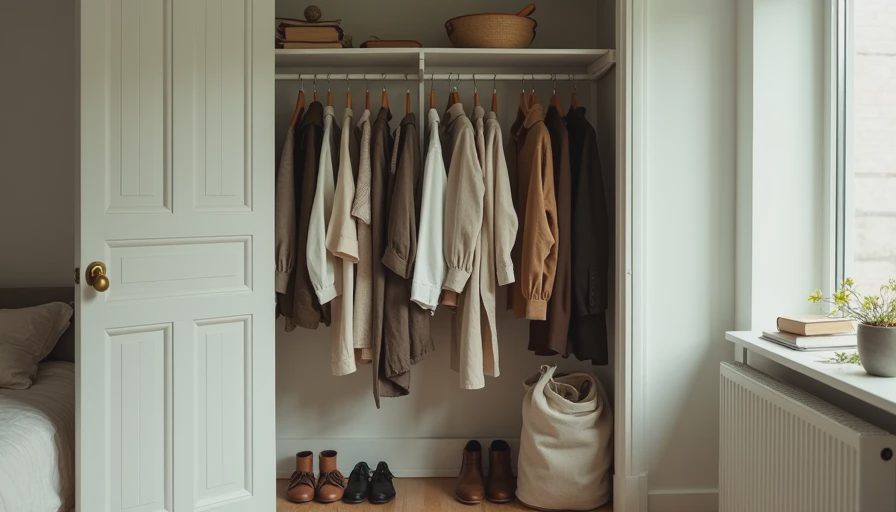
It doesn't mean I own a perfectly curated capsule wardrobe of 33 items. I've tried the strict capsule approach twice and found it too rigid for how I actually dress — my needs shift seasonally, my mood shifts, Portland's weather requires a range that a minimalist count doesn't accommodate comfortably. I have more than 33 items and I'm fine with that. What matters to me isn't the number, it's the use rate.
It doesn't mean I only buy from certified sustainable brands. I pay attention to brands and I'll get into that in more detail in the Worth the Label section of this blog. But certifications are expensive to obtain and don't automatically make a brand worth the premium, and a lack of certification doesn't automatically mean a brand is irresponsible. I try to read beyond the label.
It doesn't mean I've stopped enjoying fashion. This one matters enough to say directly. A significant chunk of sustainable style content online has an implicit (and sometimes explicit) anti-aesthetics bent — fashion itself as the problem, visual pleasure in dressing as something to overcome.
That's not where I am. I still find clothes interesting. I still have opinions about proportions and color and what a well-constructed jacket feels like. What's changed is that the enjoyment is now more tied to using things than to acquiring them. Those aren't the same feeling, and the second one turns out to be more durable.
The version of this that works, for me, is less about ideology and more about changing the habits closest to the behavior. Buy secondhand first. Check the fabric. Wait before buying. Repair instead of replacing. Wear things again.
None of that requires a complete identity overhaul. It just requires slightly different defaults.

Travellers Write
No letters yet — be the first traveller to write.