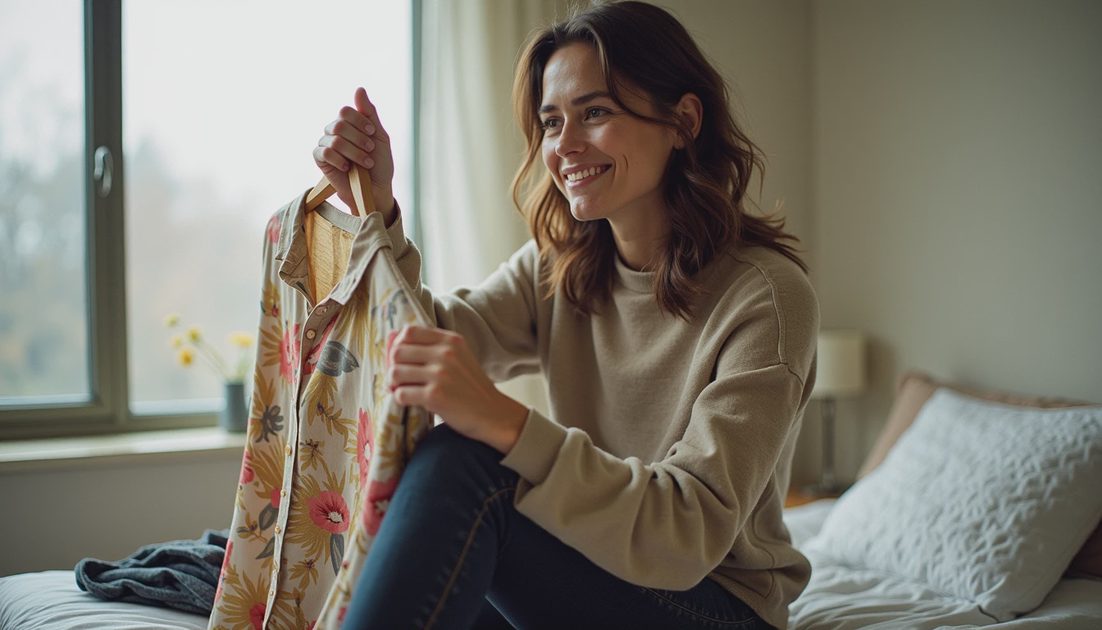
There's a specific category of purchase I made in my mid-to-late twenties that I've come to think of as "magazine clothes."
Magazine clothes are not bad clothes, necessarily. They're often genuinely beautiful. They photograph extremely well. They make sense in the context of a shoot — surrounded by other considered pieces, on a model whose job is to wear them, in a setting that was art-directed to complement them. The problem is that they don't always survive contact with an actual life.
I bought a lot of magazine clothes. Some of them because I genuinely loved them. Some because I'd been around trend language long enough that "this is the piece of the season" had started to feel like a reason. Some because working in fashion media created a low-grade social pressure to look a specific way — edited, trend-aware, visibly engaged with what was current — and buying things was the most efficient way to perform that.
I don't regret all of it. Some of those purchases were genuinely good, and a few pieces from that era are still in my wardrobe. But a significant portion taught me things I couldn't have learned any other way, and since this blog is supposed to be honest, here's the inventory.
The Categories That Cost Me the Most
Statement pieces bought for one specific context.
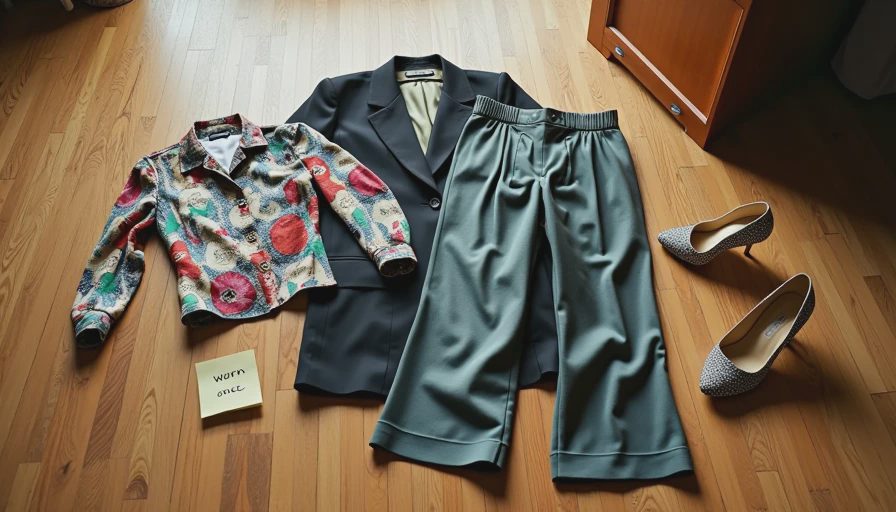
I owned, at various points: a sculptural blazer in an architectural silhouette that required a very specific outfit to work and approximately zero of my actual daily contexts; a pair of wide-leg silk trousers that looked extraordinary in editorial and wrinkled catastrophically in transit; a printed midi skirt in a bold geometric pattern that was genuinely striking and genuinely difficult to style with anything I actually owned.
The pattern in each case was the same. I saw the piece in a context where it was surrounded by other deliberate choices — a shoot, a showroom, a very edited Instagram post — and I bought the piece without buying the context. Back in my actual wardrobe, the piece had nothing to talk to. It needed other things I didn't have, or a version of my daily life that didn't exist, or a tolerance for looking visibly "done" at nine in the morning that I simply don't have.
The lesson I eventually absorbed: a statement piece is only as useful as the wardrobe it's entering. Buying a statement piece when you have a coherent, well-functioning wardrobe can be a great decision. Buying one when your wardrobe is already a little chaotic usually just adds to the chaos.
Trend pieces bought slightly too late.
There's a specific window in which a trend piece feels exciting and a specific window in which it starts to feel dated, and the gap between them is shorter than you'd think. I bought a pair of chunky-soled boots in a style that had been prominent for about two seasons already, a needlepoint bag at the absolute peak of its cultural moment, and a neon-accented workout set that was everywhere for approximately eight months and then wasn't.
None of these purchases were expensive mistakes exactly — I wore the boots for a season, the bag for less. But they represent a pattern I now recognize: buying trend pieces with enough delay that by the time I owned them I was already sensing their expiration. The magazine world I worked in moved on trends faster than consumer retail, which meant that by the time something was widely available and prominently marketed at the consumer level, the editorial world had often already moved on. I knew this intellectually and still fell for it repeatedly.
"Investment pieces" that weren't.
The investment piece is a durable concept in fashion — the idea that spending more on a single, well-made item is ultimately more economical than spending less on something cheaper. I believe this is genuinely true, with an important caveat: an investment piece is only an investment if you actually wear it enough times to justify the cost, and if the quality is real rather than just marketing.
I bought a coat from a brand positioning itself as an ethical investment-piece label that developed visible wear within a year and a half. I bought a leather bag at a significant price point from a heritage brand whose leather I should have handled more carefully before purchasing — within two years it had developed a patina I didn't like and hadn't anticipated. I bought a cashmere sweater that pilled aggressively after four washes despite the brand's quality claims.
Some of these were genuinely bad products. Some were cases where I hadn't done enough research. A few were situations where the "investment" framing had done enough work emotionally that I'd bought without asking the right questions. I now treat "investment piece" as a signal to be more rigorous, not less — because the more expensive something is, the more important it is to verify that the quality and your actual use patterns justify it.
Things I bought because they looked good on someone else.
This one is the most honest and possibly the most common. I bought a slip dress after seeing it on a colleague who wore it constantly and beautifully — it was clearly a piece that suited her exactly, and I wanted that feeling. It did not suit me in the same way. Different proportions, different coloring, different lifestyle. I wore it three times over two years and eventually donated it.
I bought a specific shade of camel coat because it was everywhere one autumn and looked genuinely excellent on approximately everyone I saw wearing it on my commute. It did not look genuinely excellent on me. Camel at that particular warm-yellow tone is a difficult color against my complexion — something I could have tested before buying if I'd been less caught up in the ambient desirability of the piece.
The trap here is that fashion media, by its nature, shows you clothes on people who are particularly good at wearing them. Working in that environment amplified the effect. I got better at noticing what looked good on others without simultaneously developing a reliable sense of what would look good on me specifically — and those are genuinely different skills.
What Changed the Pattern
The shift wasn't dramatic. It was more like a series of smaller corrections that compounded over time.
I started asking a specific question before buying anything: where, specifically, am I going to wear this? Not "where could I theoretically wear this" — anyone can construct a fantasy occasion for almost any garment — but where, in my actual scheduled life over the next few months, would I actually put this on. If I couldn't name at least three real occasions, I made myself wait.
I stopped reading trend coverage as a form of guidance and started reading it as information about what the industry was currently producing. Those are different things. Knowing that a particular silhouette or color is prominent this season is useful context. It's not a reason to buy.
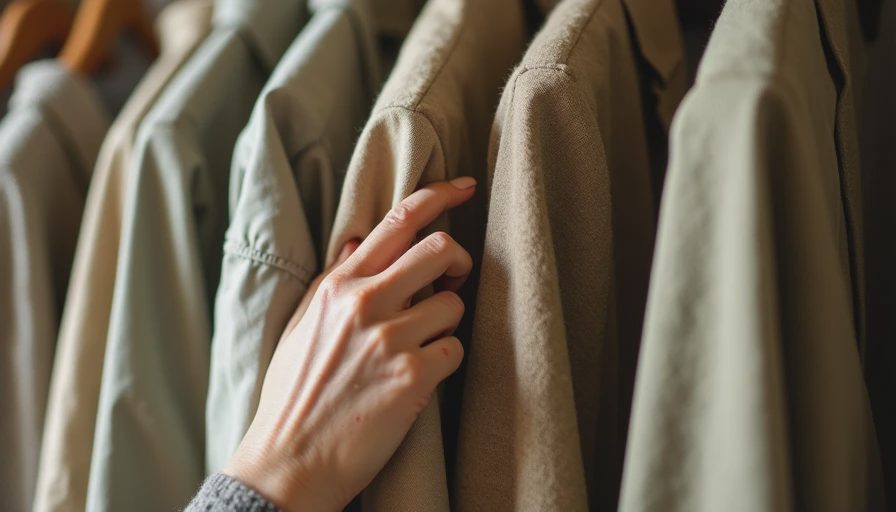
I paid more attention to what I was actually reaching for. The pieces I wore most weren't usually the ones I'd been most excited about purchasing. They were quieter — a well-cut pair of trousers, a linen shirt in a color that worked with everything, a knit that handled the Portland drizzle without looking like I was dressed for the drizzle. The relationship between excitement-at-purchase and actual-wear-frequency turned out to be almost no relationship at all.
The magazine clothes era wasn't wasted, exactly. I learned a lot about fabric, construction, and what makes a piece photograph versus what makes a piece work. That knowledge is genuinely useful now. But I learned it at a cost I could have spent differently, and if I were starting from scratch, I'd tell myself to spend more time in thrift stores and less time around trend forecasting — and to trust my own getting-dressed experience more than any external signal about what was currently worth wearing.

Travellers Write
No letters yet — be the first traveller to write.