
There's a specific kind of shopping high I got really good at manufacturing.
It went like this: new issue hits, or a brand sends samples, or I'm on-site at a shoot and something just looks right on the rack. Something clicks. I'd walk into a store or open a tab with a clarity that felt like certainty, pick the piece, and leave feeling like I'd solved a problem I didn't know I had. It was efficient. It was decisive. It felt like taste.
I worked in fashion media for most of my twenties, and that feeling — that swift, editor-brain certainty — was basically part of the job description. You were supposed to be able to walk a showroom and know within seconds what was worth photographing, what had staying power, what was the season's thing. I got good at spotting it. What I got less good at, without really noticing, was asking whether I actually needed it.
I'm not writing this as a confession piece, or to perform guilt about a job I genuinely liked. But if I'm starting a blog about dressing more thoughtfully, it probably helps to say this plainly: I used to shop the way fashion media trained me to shop. Quickly. Trend-aware. Season by season. And almost entirely disconnected from how I actually lived.
The Closet That Revealed Everything
A few years ago, I moved out of a cramped one-bedroom in New York and into a house in Portland with my boyfriend. And for the first time in years, I had room to see everything I owned laid out at once.
It was not flattering.
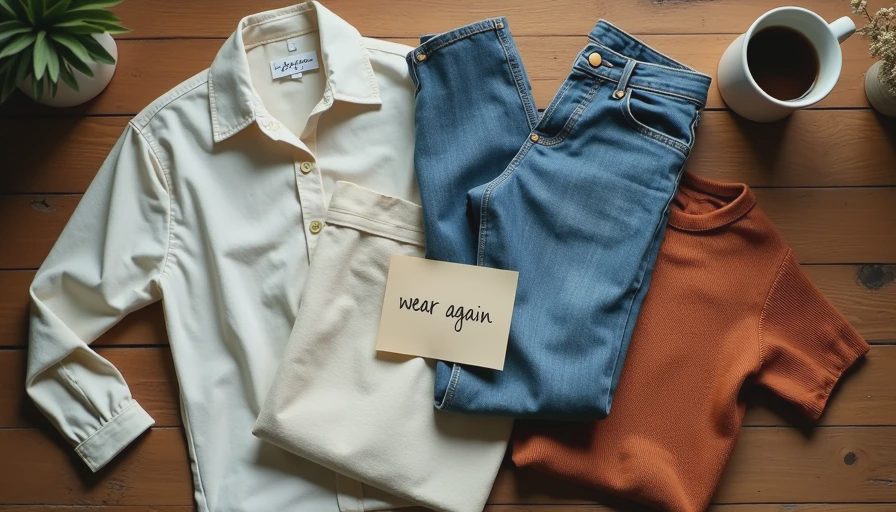
Not the clothes themselves — some of them were genuinely beautiful. What wasn't flattering was the pattern they revealed. A blazer I'd bought for a specific party and worn once. Four variations of a silky slip dress that I'd cycled through when that look was everywhere, and then stopped wearing almost entirely. An expensive "investment coat" in a bold color I'd convinced myself was versatile, which had turned out to be neither an investment nor versatile. Twelve white shirts — I counted — in slightly different cuts and fabrics, as if I was perpetually looking for the perfect one and never quite finding it.
None of these were bad pieces. But so many of them were pieces I'd bought for a version of my life that didn't quite exist, or a trend moment that had passed, or a level of formality that Portland didn't ask of me the way New York had.
The closet wasn't a problem of too much stuff. It was a problem of a lot of shopping that had never really been about me.
What Actually Changed (It Wasn't a Dramatic Purge)
Here's what I didn't do: I didn't do the big cinematic declutter. I didn't dramatically bag up half my wardrobe and feel reborn. I've read enough pieces about that particular ritual to know that for most people — myself included — it doesn't tend to stick. You edit, you feel lighter, and then six months later you've filled the space back up with a slightly different version of the same habits.
What I actually did was slower, less photogenic, and honestly more useful.
I stopped shopping for about four months. Not as a challenge or a content experiment — just because I was unpacking boxes in a new city, starting a new chapter, and didn't have the bandwidth for it. And during those four months, I started noticing things I hadn't noticed before.
I noticed which pieces I reached for again and again, and which ones I kept moving aside. I noticed that the "basics" I'd always bought in a hurry at chain stores wore out in a way that nicer secondhand pieces didn't. I noticed that the items I felt most like myself in were almost never the trendy ones. I noticed that I was getting dressed more quickly and feeling better about what I chose when I had fewer, more coherent options — not more.
None of this was a revelation, exactly. These are things people say all the time about capsule wardrobes and slow fashion. But there's a difference between knowing something in theory and having your actual Monday morning getting-dressed experience shift because of it.
That shift is what made me want to start writing again.
What This Blog Is Actually About
The Worn Edit isn't a manifesto blog. I'm not going to tell you that fashion is corrupt, or that you should feel bad about the clothes you own, or that there's one correct ratio of items in a wardrobe. I don't think any of that is true, and honestly I find that kind of content exhausting even when I agree with the underlying values.
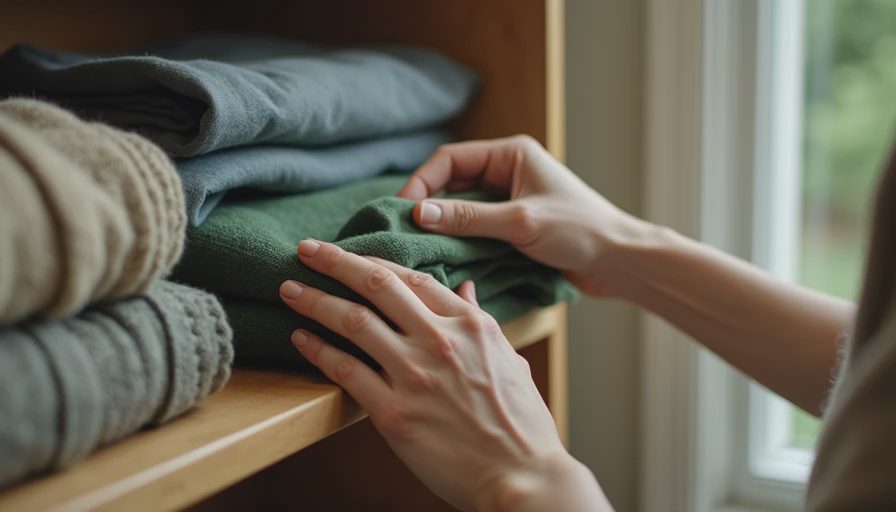
What I'm more interested in is the practical middle ground — the actual strategies and habits that make it possible to love clothes and still use them well. Things like:
How to shop secondhand without just buying more stuff you don't need, only cheaper. How to actually repeat outfits and feel good about it instead of vaguely apologetic. How to evaluate a "sustainable" brand's claims without a chemistry degree or a lot of free time. How to mend or alter something imperfect instead of immediately replacing it. How to build an outfit logic that works for your real life, not an aspirational one.
Some of what I write here will come from my background in fashion — understanding what fabrics hold up, how to read brand messaging, why something photographs beautifully but doesn't actually wear well. Some of it will come from ongoing experimentation, including things that don't work the way I expected. I have a rescued dog who sheds on everything. I live somewhere that is overcast roughly three hundred days a year. I own a sewing kit and use it with what I would describe as "enthusiastic mediocrity."
This blog is going to reflect that. Not curated. Not aspirational. Just honest about what it looks like to try to do this better, in a real life, with real constraints.
You don't have to do it perfectly. You just have to do it better than yesterday.
Welcome to The Worn Edit.


Travellers Write
No letters yet — be the first traveller to write.