
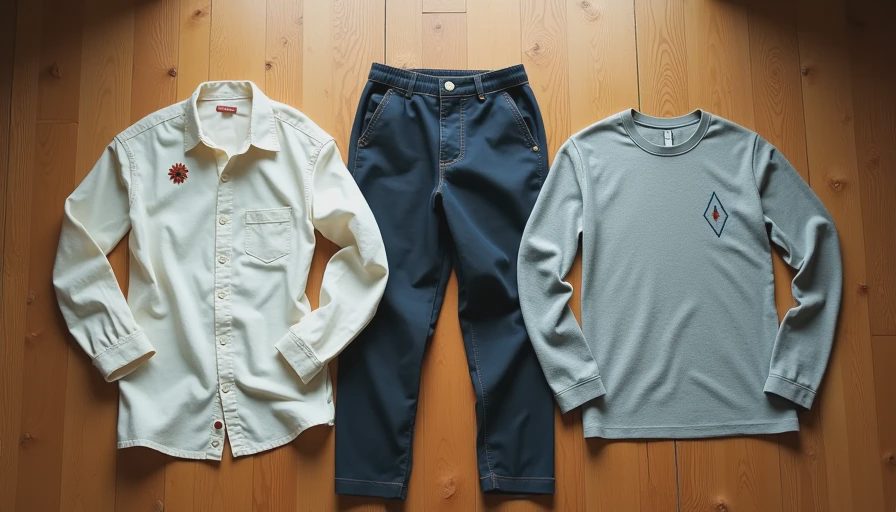
Three garments. Three different kinds of damage. Three solutions that were available to someone with a sewing kit, an embroidery hoop, about six hours of practice spread over two months, and no professional tailoring skills whatsoever.
I'm writing this as a companion to the visible mending piece, but the focus here is different — that piece was about where to start and what stitches to learn. This one is about specific cases: what happened, what I tried, what worked, and what I'd do differently.
The honest framing first: two of these repairs are things I'm genuinely pleased with. One of them is functional but has some things I wish I'd done differently. I'll be specific about all three.
Garment One: The Linen Shirt
This is the repair I'm most pleased with, and also the one I was most anxious about because the shirt mattered to me.
The shirt is a cream linen button-up I found on The RealReal about two years ago — good weight linen, a label I didn't recognize but clearly quality, in excellent condition. I'd worn it probably thirty times before I made the mistake of eating pasta in it without noticing I'd splashed a small amount of oil near the second button. Oil on linen is a specific kind of problem: it doesn't wash out the way water-based stains often do, and cream linen shows grease as a faint, slightly darker mark that's nearly invisible in some lights and very visible in others.
I tried the standard interventions first — dish soap worked directly on the stain while the fabric was dry, then washed through. It helped but didn't resolve it entirely. After two washes, there was still a faint ghost of the stain visible in good light.
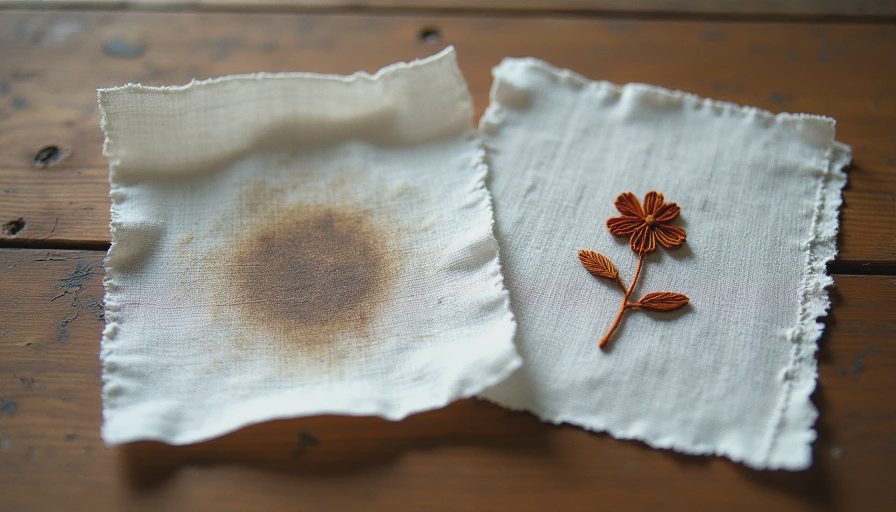
The solution I landed on was a small embroidered motif directly over the stain. A simple five-petal flower, about the size of a one-pence coin, in rust-orange thread. I practiced the motif three times on a scrap of similar linen fabric before I did it on the shirt — that practice made an enormous difference. By the third practice, the proportions were right and my stitch tension was consistent enough that it looked deliberate.
The result: the stain is completely invisible. The motif looks intentional — small, specific, like something you might find on a carefully chosen piece rather than a repair. I've been asked where the shirt is from twice since doing the repair, which is more than I was asked before.
What I'd do differently: I'd start the embroidery slightly higher. The placement was correct for covering the stain, but it sits one centimeter below where it would look most natural compositionally on the shirt's front placket. It's not wrong, but I notice it.
Garment Two: The Navy Chinos
This one is the functional-but-imperfect repair.
The chinos are a well-made pair of navy cotton twill trousers I've had for four years. At some point — I genuinely cannot identify when — a small bleach splash landed on the front of the left leg, about eight centimeters above the knee. Bleach on navy is irreversible: it removes the dye and leaves a pale, slightly orange-toned mark where the fabric has been stripped. There's no covering this with stain remover or rewashing.
My first instinct was to try fabric dye to restore the area. I bought a navy fabric dye, tested it on the inside of the waistband, and found the color match wasn't close enough — the dyed area read as slightly purple against the original navy. I abandoned that approach.
What I did instead was a small patch — a piece of toning navy fabric cut from the inside pocket bag of a pair of jeans I'd already retired, secured over the bleach spot with a running stitch in slightly contrasting thread. The patch is about four centimeters square. I folded the edges under and stitched through all layers.
The result is visible and clearly a repair. It doesn't look terrible — the tone is close enough that you have to look for it — but it's not the charming, deliberate-looking repair the linen shirt became. It reads more as practical than intentional.
What I'd do differently: I'd use a patch from better-matching fabric — specifically, I'd save fabric from retired garments systematically rather than scrambling for a close-enough match when I need it. I've since started keeping a small bag of fabric scraps from anything I retire, precisely for situations like this. The patch itself was the right solution; the fabric match was the limiting factor.
I still wear the chinos. The repair is on the front of the leg and visible if you're looking for it, but in practice no one has ever mentioned it. Functional is enough.
Garment Three: The Grey Sweatshirt
This is my favorite repair outcome of the three, partly because the stakes were lowest and I gave myself the most creative freedom as a result.
The sweatshirt is a heavy cotton fleece-back sweatshirt in a warm mid-grey that I've had for years. It developed a bleach spot — again, the culprit is almost certainly cleaning products, and I've since started being more careful about what I'm wearing when I'm cleaning — on the left arm, a diffuse pale area about the size of my palm.
Because the bleach damage was diffuse rather than a clean-edged spot, patching wasn't going to look right. The shape was irregular and covering it with a specific-shaped patch would have looked stranger than the damage itself. I decided to use embroidery, but with a different approach than the linen shirt — instead of a small, discreet motif, I leaned into making the repair visually interesting.
I embroidered a simple geometric diamond shape in deep teal thread, centered in the bleach spot. The diamond is about six centimeters across, with a running-stitch fill inside and a single backstitch outline. The teal against grey is a strong contrast — it's not trying to blend in, it's accepting that the repair is visible and making the visibility deliberate.
The result is the one repair out of the three that I'd genuinely describe as an improvement on the original garment. The sweatshirt has a visual point of interest it didn't have before. The repair is clearly hand-done — the diamond isn't perfectly symmetrical, the stitch tension varies slightly across the fill — and that imperfection is part of why it works. It looks like something someone chose to do, not like something that was done to it.
What I'd do differently: honestly, not much. The only thing I'd potentially change is making the diamond slightly larger — the fill took longer than expected because I was working at too small a scale, and a marginally bigger shape would have been easier to execute and proportionally slightly better.
What Three Repairs Taught Me
Looking at these three cases together, a few patterns emerge that I think are more useful than any single technique.
Embroidery that acknowledges itself works better than embroidery trying to hide. The linen shirt motif works because it looks intentional. The sweatshirt diamond works because it's not trying to disappear. The chinos patch is the least satisfying repair because it's neither invisible enough to be seamless nor deliberate enough to be a design choice — it occupies an awkward middle ground.
If you're going to repair visibly, lean into visibility. If you want an invisible repair, that requires either professional-grade technique or a very specific set of circumstances. For most beginners, the visible-and-deliberate approach is more achievable and often more interesting.
Material matching is genuinely important for patches, and worth planning for. Keeping fabric scraps from retired garments isn't a craft-person habit — it's a practical resource for future repairs. A well-matched patch is substantially better than a close-enough patch, and you can only have a well-matched patch if you have the right material available when you need it.
Practice on scrap fabric before touching anything you care about. I've said this before and I'll keep saying it because the difference in outcome is significant. The three practice runs before the linen shirt embroidery are directly responsible for the quality of the final result. Skipping that step on something I cared about would have produced a noticeably worse repair.
The three pieces are all still in use. That's the only metric that ultimately matters — they were heading for donation or disposal, and they're not. Everything else is detail.


Travellers Write
No letters yet — be the first traveller to write.